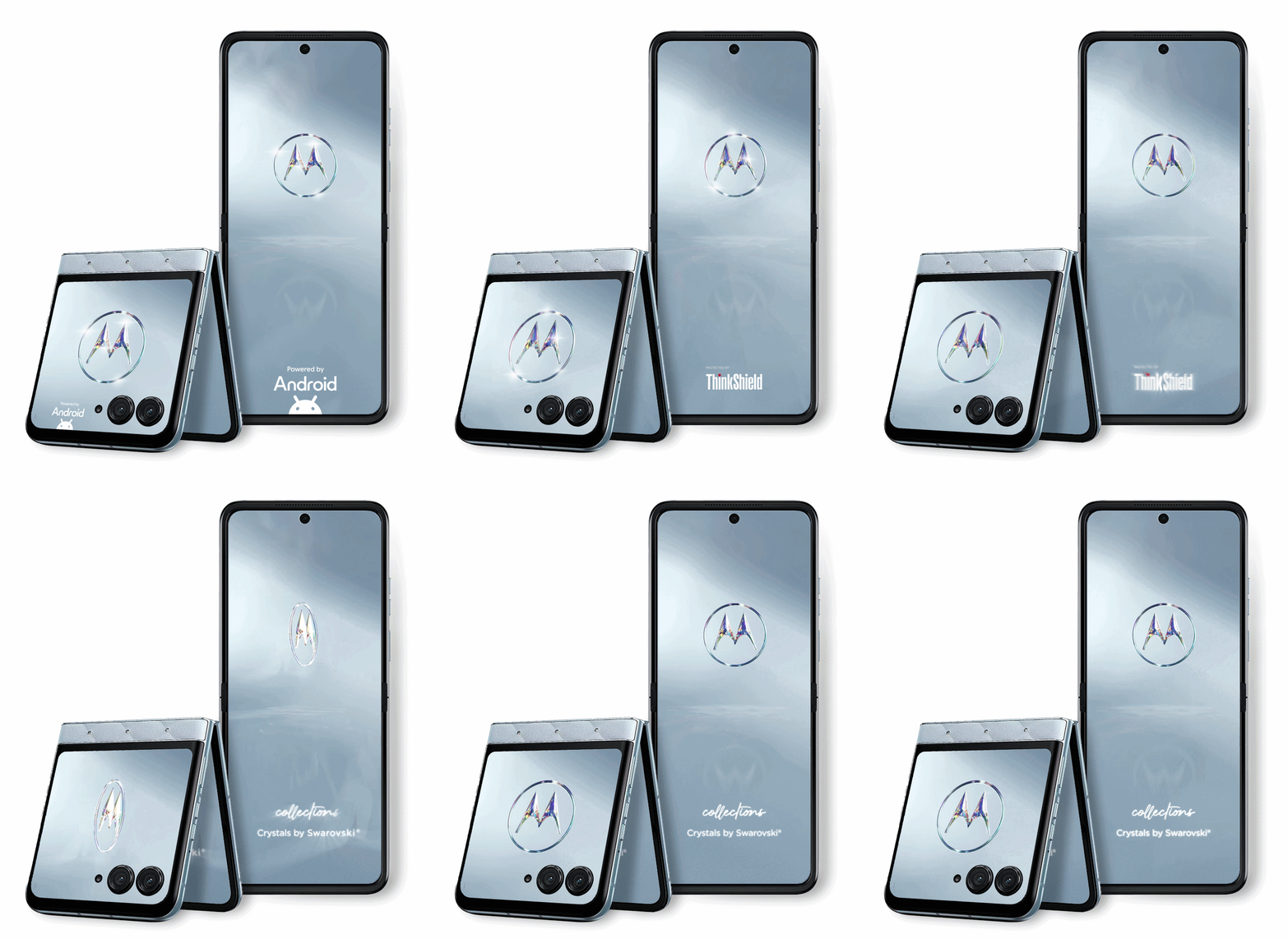
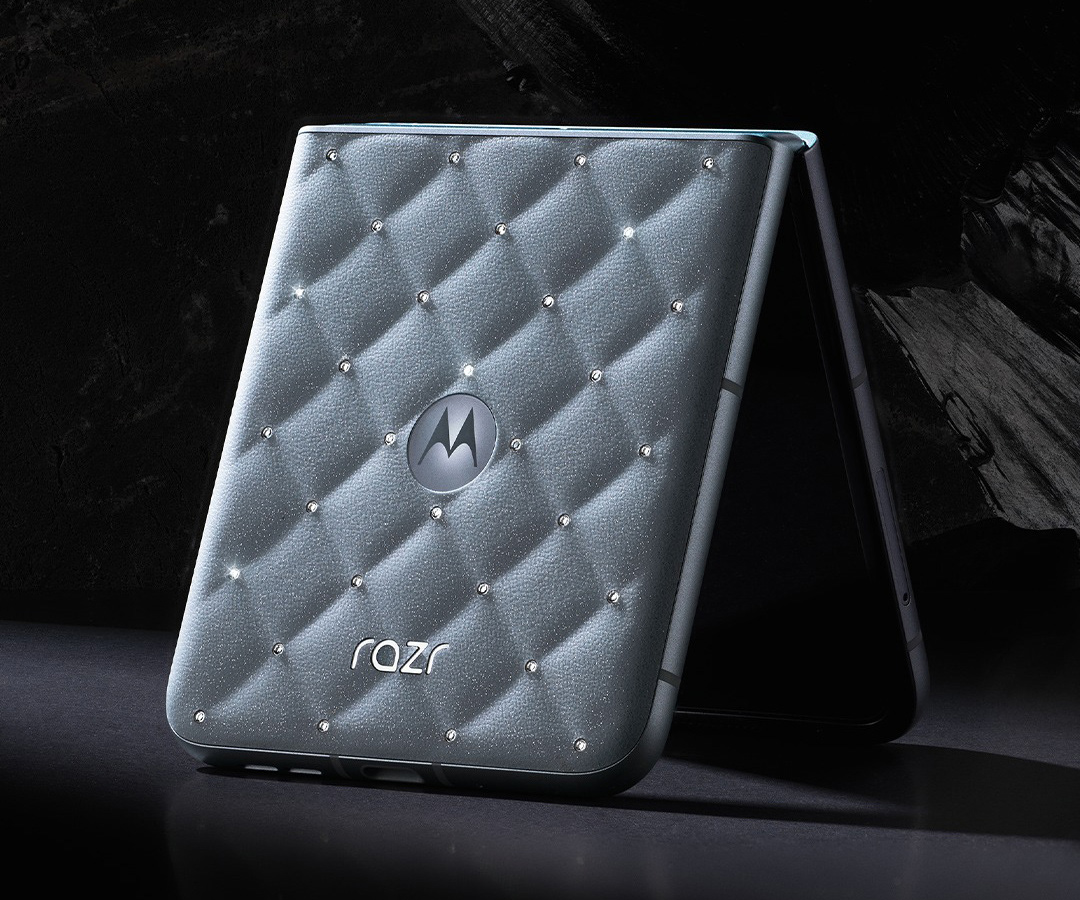
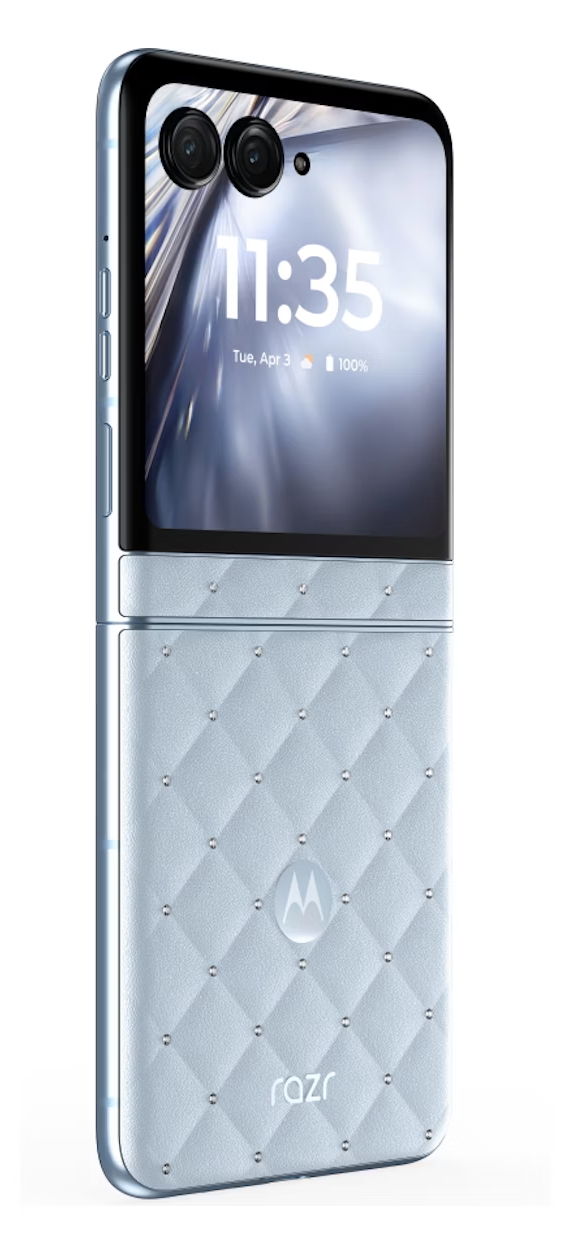
At Motorola, I owned the development of the bootup animation for the Razr 60 Crystals by Swarovski, the flagship foldable device released for the Collections series, a strategic initiative of the brand to reinforce its positioning of smartphones as objects of identity, not just utility. The device itself features a quilted 3D finish with 35 hand-placed Swarovski crystals. My role went beyond execution, as I was responsible for translating a luxury physical product into a cohesive, expressive and sensorial motion experience, aligning Motorola’s design vision with Swarovski’s delicate language.
Creative direction and execution
I kicked off the project by conducting a detailed study of Swarovski’s communication and aesthetic codes. From there, I developed multiple explorations and closed in a few creative directions, which were presented to leadership and reduced to the chosen path. The final concept. The final concept centers on a crystalline Motorola logo in motion, using refraction, light dispersion and sparkle dynamics to evoke craftsmanship and a crystalline feel. Every element, from timing to light behavior, was designed to reinforce a sense of premium tactility.
To achieve this look, I directed a collaboration with the 3D design team, that provided me with render passes of the 3D logo spinning once. I used time remapping to control repetitions and rhythm, and then explored adjustments in color, lighting, compositing and reflections. I then designed and animated sparkles with a sense of depth, synchronized with the logo rotation. The final layout also features a luminous typographic reveal on the lower half that I created and animated.
Adaptation and implementation
From the beginning of the project, I proactively aligned with other teams to map the full bootup flow and its technical constraints, including mandatory system logos and branding requirements. This involved structuring the sequence from the initial static Android screen, through the main animation and its transition into a seamless loop, and, for first-time use, connecting it to the Setup Wizard. Each stage was designed to connect smoothly, avoiding a fragmented user experience.
Besides the assets for the device's main foldable screen, the animation was adjusted to the external CLI display and later adapted for other devices such as tablets, assuring consistency across Motorola’s ecosystem. I worked within strict technical requirements, exporting the animation to JSON and collaborating closely with UX and engineering teams to ensure fidelity across implementation.
To support future adaptations, I established a guideline defining timing structure, asset sequencing, main motion principles and technical specifications.